Montmartre
Montmartre works best as a neighbourhood sequence rather than a list of landmarks: climb, wander, pause, then choose whether to stay for the evening.
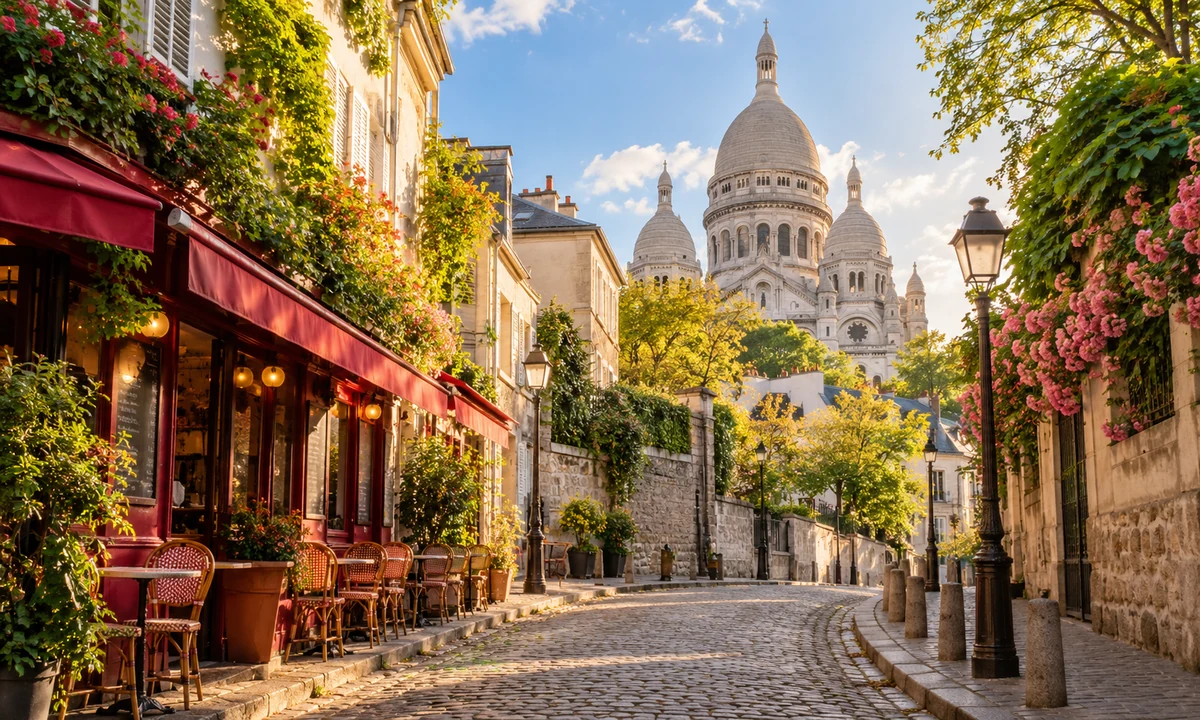
Place history
Montmartre remained an independent municipality until it was annexed to Paris in 1860. In the late 19th century, lower rents, studios, cabarets and former quarries attracted artists and working-class residents; the hill still preserves traces of the village that was absorbed by the capital.
Le Plan tip
Leave the busiest streets around Place du Tertre and take at least one quieter side street.
When to go
Early morning, or late afternoon into evening.
Fit it into your trip
Montmartre works best when you let the pace change. Choose one climb, a few streets and a pause instead of ticking off every famous point. Sacré-Cœur Basilica is a clear landmark, but the neighbourhood also rewards the walk between its squares and quieter streets. Slopes and steps matter in a walking day: adapt the approach and time if mobility is a concern. A food tour or an evening show is a separate experience to add only if it fits the rest of your day.
Check opening times, access and prices before visiting.